Key features of Temporary Lifelines

Lifeline

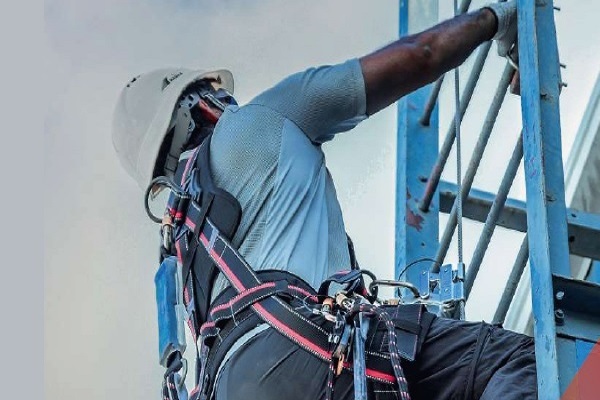
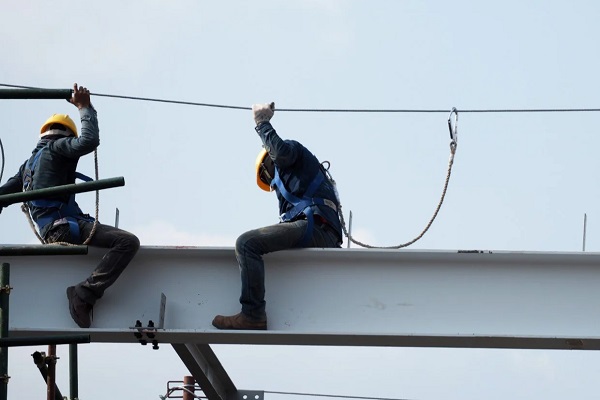
When working at heights where permanent fall protection isn’t feasible, Temporary Lifelines (TLLs) are used for site safety. Whether you’re navigating a rooftop, erecting steel, or performing bridge maintenance, these systems provide a mobile “anchor” that moves with you.


What is a Temporary Lifeline?

A temporary lifeline is a flexible line—typically made of synthetic fiber rope, webbing, or wire cable—connected between two or more anchor points. It acts as a component of a Personal Fall Arrest System (PFAS), allowing workers to move horizontally or vertically while remaining tied off.
Because they are “temporary,” they can be installed, used for a specific task, and then dismantled once the job is complete.

Core Types of Systems

Type

Material

Best For…

Horizontal (HLL)

Synthetic rope or wire

Construction, roofing, and tasks requiring lateral movement across a ledge.

Vertical (VLL)

Kernmantle rope or cable

Climbing ladders, towers, or moving up and down steep slopes.

Synthetic/Webbing

Polyester/Nylon

Lightweight tasks and short-term projects; easy to transport.

Cable (Steel)

Galvanized/Stainless steel

High-abrasion environments or long-duration projects where durability is key.

Key Components for Safety

A lifeline is only as strong as its weakest link. A standard setup usually includes:

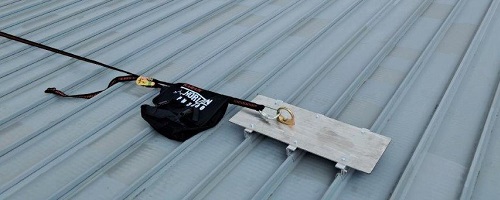
1. Anchorage Connectors: Heavy-duty straps or clamps that secure the line to the structure.

Anchor Point of a Horizontal Temporary Lifeline

2. The Lifeline: The actual “line” that bears the load.

3. Tensioner: A device (like a ratchet or turnbuckle) used to remove slack from the line.

4. Shock Absorbers: Critical for reducing the “arrest force” on the anchors and the worker’s body during a fall.

5. Personal PPE: Your harness and lanyard/SRL (Self-Retracting Lifeline) that connects you to the TLL.

The Critical Role of "Fall Clearance"

One of the most common mistakes is forgetting that lifelines stretch and sag under the weight of a fall. You must calculate your total fall distance using this formula:

Total Clearance = Free Fall + Deceleration Distance + Stretch + Safety Factor

Note: On a horizontal lifeline, “stretch” includes the initial sag of the cable plus the dynamic deflection ( how much the cable bows when hit with the force of a falling person ).  If you’re only 3 meters off the ground, a lifeline with 4 meters of total deflection won’t help you. 

Installation & Best Practices

✅   Inspect Before Every Use: Check for frays, burns, or “bird-caging” in cables. If the system has been involved in a fall, it must be removed from service immediately.
✅   Mind the “Swing Fall”: If you move too far to the side of your anchor point, a fall will cause you to swing like a pendulum, potentially striking objects nearby.
✅   Clearance Check: Always ensure there is enough empty space below you to account for line stretch.
Why Use Them?

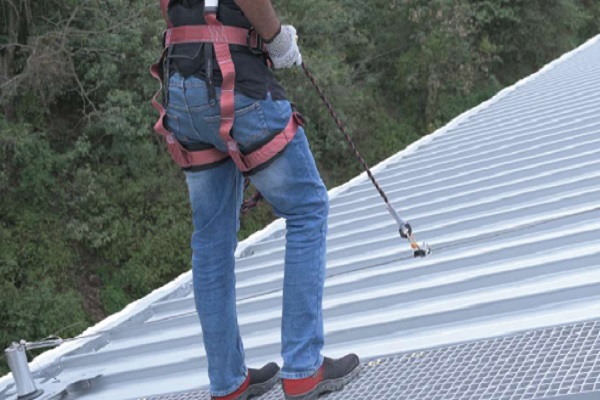
– Temporary lifelines offer versatility. They allow for a wider range of motion than a single fixed anchor point.
– By keeping you connected while you move, they provide the perfect balance between productivity and protection.
– Specific installation requirements for a particular industry, like residential roofing or industrial steelwork?

In conclusion, Temporary lifelines should be anchored to secure structures capable of supporting the intended load. Both fixed and temporary lifelines play crucial roles in fall protection systems, providing workers with safe anchor points while working at height.

Phakimisa Industries, provides high-quality safety solutions, which includes Temporary Lifeline system, Lifeline Systems and Personal Fall Arrest System (PFAS) that ensure maximum fall protection