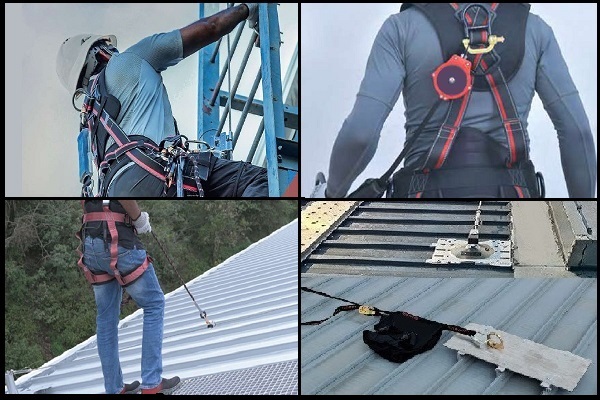
A Lifeline System is an essential part of fall protection in industries where workers are exposed to fall hazards, such as construction, maintenance, telecommunications, and utility work. A complete system ensures that if a fall occurs, the individual is safely arrested, minimizing the risk of severe injury.
Main components :
. Wire Rope Lifeline
. Anchor Points
. Harnesses
. Harness Attachment to Lifeline
1. Wire Rope Lifelines
What Is It?
A wire rope lifeline is a flexible, high-strength cable that serves as the horizontal or vertical guide to which a worker is connected. It allows a worker to move along a set path while remaining protected from falls.
Material and Specifications:
Typically made from galvanized or stainless steel to resist corrosion. Must comply with standards like OSHA 1926.502 or ANSI Z359.6 for strength and durability.
Types:
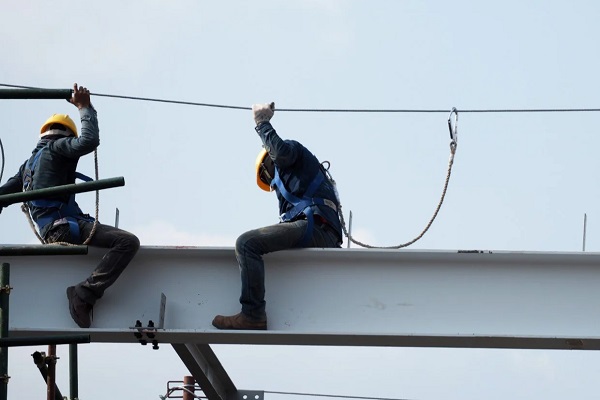
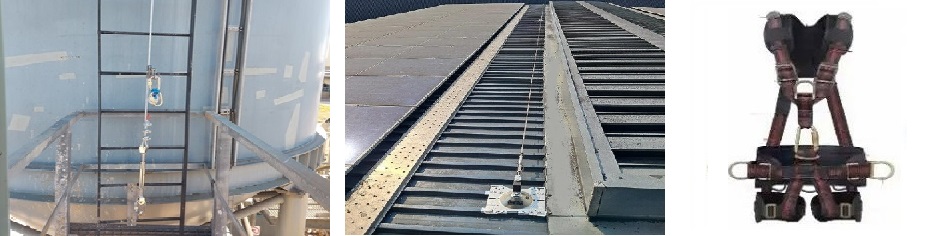
Horizontal Lifeline (HLL): Spans across structures to allow horizontal movement. Vertical Lifeline (VLL): Used on ladders or tall structures for vertical mobility,
2. Anchor Points
Definition:
An anchor point is a secure attachment point for lifelines, lanyards, or deceleration devices.
Types of Anchor Points:
.Permanent Anchors: Installed during construction for long-term use.
.Temporary Anchors: Portable systems used for short-duration tasks.
. Fixed-Point Anchors: Bolted or welded onto structures.
. Mobile Anchors: Can be repositioned depending on work location (e.g., trolley anchors on beams).
Requirements:
. Must be engineered to provide a 2:1 safety factor.
. Should be installed above the worker to reduce fall distance.
3. Full-Body Harnesses
Purpose :
Distributes fall forces across the body in the event of a fall. Prevents injuries by securing the torso, legs, and shoulders.
Features :
. D-ring on the back (dorsal): Primary attachment point for fall arrest.
. Additional D-rings may be located on the sides (work positioning) or front (ladder climbing systems).
. Adjustable straps for a snug, secure fit. . Padding for comfort during extended wear.
Compliance :
Harnesses should meet ANSI Z359.11 or EN 361 standards.
4. Harness Attachment to Lifeline
Connection Procedure :
. Inspect all components: lifeline, lanyard/SRL, and harness.
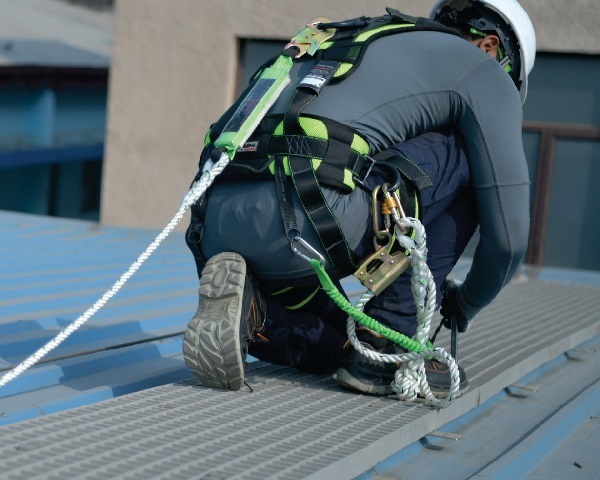
. Attach the lanyard or SRL’s snap hook to the dorsal D-ring of the harness
. Ensure locking mechanisms are fully engaged.
. Connect the other end to the lifeline or anchor point, confirming secure attachment.
In conclusion,
A complete lifeline system is more than just a wire rope; it’s a carefully designed combination of components that work together to save lives.
Each element—from the harness to the anchor point—must meet regulatory standards and be compatible with the others.
When properly installed and used, these systems provide a critical layer of protection for those working at height.
Phakimisa Industries, provides high-quality safety solutions, including lifeline systems with installation that ensure maximum fall protection.