Synthetic lifting slings are one of the most frequently used equipment on any work site.
They can support heavy loads, and their soft material offers better load protection than wire rope made of coarse cloth.
Synthetic slings are mostly made from lightweight, durable, and flexible materials such as polyester.
They are widely used in heavy industries such as construction and shipping as they are affordable, durable, and available in various sizes.
Types of Synthetic Lifting Slings Manufactured By Phakimisa Industries
Web Slings
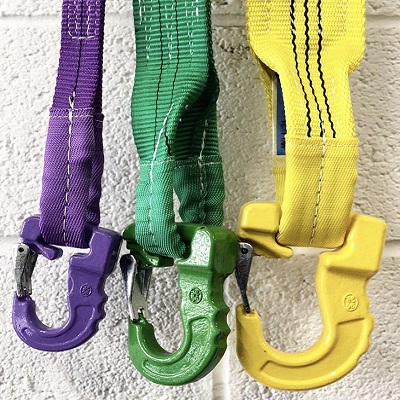
Web slings consist of flat belt straps with fittings and holes.
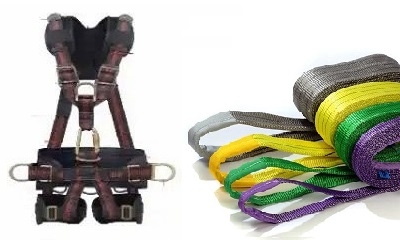
Web slings are the most commonly used sling. In contrast to chain slings, they have better flexibility and are lighter.
They can also be manufactured with a wide breadth to increase surface area to handle heavyweight objects.
They are available in two types of material nylon and polyester.
During a lift, a user will observe 8-10% stretch for nylon and 3% for polyester.
Round Slings
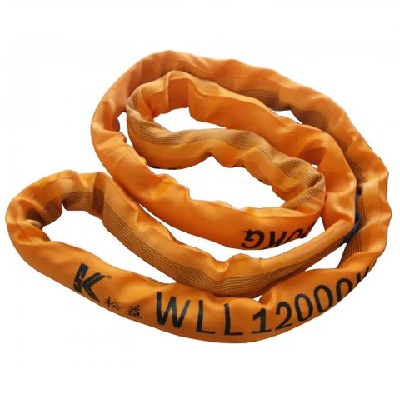
Round slings are designed with load-bearing fibers or core yarns shielded by a woven outer jacket.
These slings possess remarkable strength while being soft and pliant, and they safeguard against scratches, dents, and crushing of smooth or polished surfaces.
They can stretch 3-5% during a lift at the weight-load limit.
Advantages of Synthetic Slings
From lifting to rigging, synthetic slings are useful for various industrial applications.
Read on further to learn more about what makes these lifting slings so tough and adaptable.
Highly Flexible
The flexible fibers of these synthetic slings are excellent for quickly gripping irregularly shaped loads.
This quality also makes them perfect for lifting fragile or soft objects without scratching or piercing them.
Lightweight
One of the benefits of lifting slings is that they are made of lightweight material like synthetic polyester, making it easy to transport many lifting slings from one work site to the next.
Customizable According to Applications
The uses of lifting slings can vary from industry to industry.
The strength and breadth/length of synthetic slings can be customized precisely during manufacture to suit any industry application’s needs.
Various fittings can be attached to both ends for hitching or hooking a load.
Resistant to Abrasion and Cuts
Regarding durability, lifting slings are resistant to scratches as they are made from tough synthetic fibers with an added abrasion-proof layer.
This quality also makes the sling cut-resistant when the sling drags over a sharp corner while lifting an object.
But synthetic fibers are still not as tough on edges as chains or wire ropes, so proper edge protection must be used when handling loads.
Chemical Resistant
According to fiber quality standards, synthetic slings have variable degrees of resistance against chemicals. For example, nylon slings resist alkaline burning, while polyester slings have resistance against acidic burns. Nylon slings are also unaffected by grease and oil.
Adaptable to Industry Applications
From mining and construction to shipping, synthetic slings can be manufactured according to specifications to fit the needs of various industry applications.
Another advantage is that they can be used in a wide variety of hitches, such as choker hitch, basket hitch, or vertical hitch, to grip diverse objects, making lifting slings exceptionally versatile.
Long-lasting
A fantastic quality of synthetic fibers is that they do not rot like natural fibers.
Moreover, they are rust proof which makes synthetic slings better than chains.
Synthetic fibers can tolerate a wide variety of temperatures and weather conditions which natural fibers cannot, making lifting slings long-lasting and rigid.
But you should remember that they have low heat resistance compared to chains, so they cannot tolerate extreme heat environments.
Neutral and Non-Conductive
Lifting slings are not nonconductors of electricity and are non-flammable.
This property makes them safe to use in explosive environments.
Inexpensive and replaceable
Synthetic slings are cheaper to produce as compared to chain slings.
Furthermore, synthetic round slings can be repaired if they suffer damage to the outer jacket.
This cannot be done with chains; once broken, there is the additional cost of replacing them.
So, synthetic slings are the way to go if you want to save on your money.
Easy to Deploy
When compared to chains, synthetic slings are much more convenient to use.
You have to unroll and do a safety inspection which consists of checking for signs of chemical burns and knots in the sling and observing the sling for cuts and abrasions.
Once this is confirmed, the sling is ready for use in the field.
Final Words
In conclusion, synthetic lifting slings are the perfect equipment for lifting loads in heavy industries and play a significant role in making the tasks efficient and time-saving.