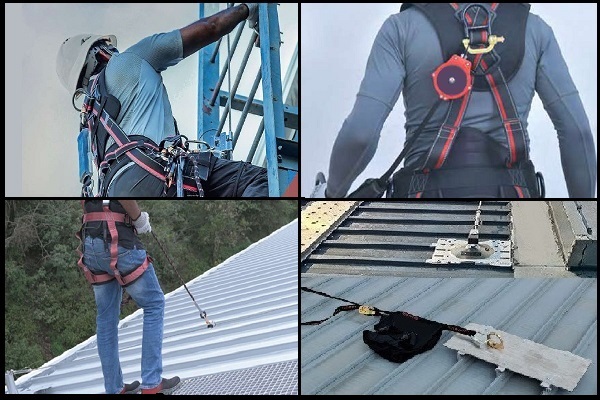

Falls from height remain a leading cause of serious injury and fatality in industrial and construction settings. To combat this critical hazard, a Personal Fall Arrest System (PFAS) is
required, and at its core lies the symbiotic relationship between the full-body harness and the industrial lifeline. Neither component is fully effective without the other; together, they form a complete, life-saving defense for workers at height.
The Full-Body Harness: The Worker’s Last Defense
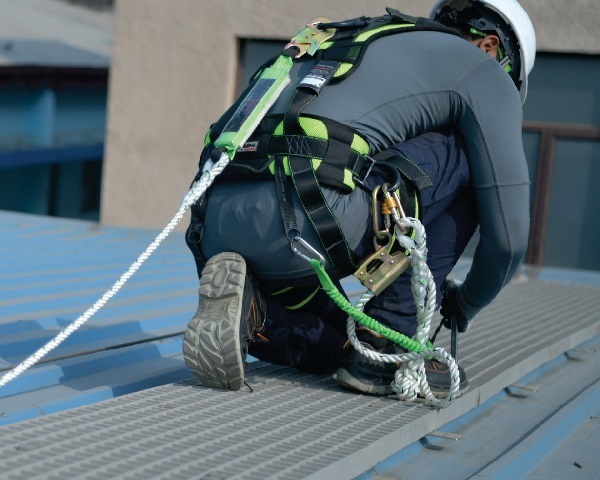
The full-body harness is the crucial component that interacts directly with the worker’s body. Its importance lies in its primary functions during a fall event:
✅ Arresting the Fall: In the event of a free fall, the harness, connected to the rest of the system, instantly stops the descent. This immediate action is vital for preventing the worker from hitting a lower level.
✅ Distributing Fall Forces: Unlike older safety belts that concentrated impact force on the abdomen, a modern full-body harness is engineered to distribute the arrest force over the body’s stronger skeletal and muscular areas—the upper thighs, pelvis, chest, and shoulders. This distribution significantly reduces the force experienced on any single point, minimizing the risk of severe injury, internal organ damage, or spinal trauma.
✅ Maintaining Upright Posture: After a fall is arrested, the harness keeps the worker suspended in a near-upright position. This is critical for two reasons: It helps in making the worker accessible for rescue. It helps mitigate the risk of suspension trauma (orthostatic intolerance), a life-threatening condition where blood pools in the legs due to prolonged suspension, restricting blood flow to the brain.
Industrial Lifelines: The Essential Connection
The lifeline, whether a wire rope or synthetic cable, acts as the continuous connection path between the worker’s harness and a secure anchorage point on the structure. It is the component that defines the safe work zone and provides the foundation for fall protection.
Types of Lifelines and Their Function:
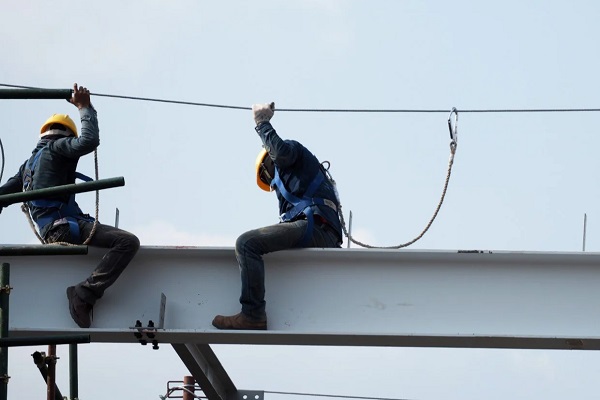
Horizontal Lifelines (HLL): Stretched between two anchor points, HLLs allow workers to move horizontally across vast working surfaces like rooftops, bridges, or building edges while remaining connected and protected.
Vertical Lifelines (VLL): Used on structures like fixed ladders, scaffolds, or tower masts, VLLs run vertically, allowing the worker to ascend or descend while remaining securely tied off via a rope grab or self-retracting lifeline (SRL).
The Lifeline’s Critical Role:
The lifeline’s importance is that it establishes the “safe zone” and manages the free fall distance.
✅ Continuous Connection: Lifelines enable workers to maintain a constant attachment to a fall arrest system, even as they move, thus avoiding momentary disconnections that could lead to a catastrophic fall.
✅ Anchor for Movement: They serve as the secure, mobile anchorage point. The worker’s harness connects to the lifeline via a lanyard or SRL, which, in turn, is fixed to a robust anchor.
✅ Regulatory Compliance: OSHA and other regulatory bodies often mandate the use of lifelines in conjunction with a harness and other fall protection equipment when working at specific heights.
The Complete PFAS: Interdependence for Survival
In a Personal Fall Arrest System, the full-body harness and the industrial lifeline are interdependent components.
Full-Body Harness ( Component )
Function in the System : Secures the person; distributes arrest force across the body
Outcome of a Failure: Severe injury/fatality due to concentrated force or body ejection.
Industrial Lifeline ( Component )
Function in the System : Provides a secure path and a continuous, high-strength connection to the anchor.
Outcome of a Failure: System failure; fall distance exceeding safe clearance; complete fatality.
In conclusion,
the Harness is useless without the Lifeline and Anchor to stop the fall, and the Lifeline is useless without the Harness to safely hold and protect the worker’s body during and after the arrest. Together, they achieve the goal of fall arrest, which is to stop a worker’s fall before they hit the lower level, while also minimizing the force exerted on the body. For any work at height, the correct and careful selection, inspection, and proper use of both the full-body harness and the industrial lifeline are non-negotiable requirements for ensuring worker safety and maintaining regulatory compliance.